
A grinding noise from the dishwasher mid-cycle isn’t just annoying, it’s usually a sign that something’s wearing out or stuck where it shouldn’t be. The good news? Many grinding sounds stem from fixable issues like trapped utensils, worn bearings, or debris in the pump. Most homeowners can diagnose the problem in under 20 minutes with basic tools and a flashlight. This guide walks through the most common culprits, step-by-step troubleshooting, and when it’s time to call in a repair tech instead of going deeper into the machine.
Table of Contents
ToggleKey Takeaways
- A dishwasher making grinding noise usually stems from fixable issues like trapped debris, worn spray arm bearings, or a failing circulation pump motor that most homeowners can diagnose in under 20 minutes.
- The easiest fix is checking for foreign objects in the spray arms and sump area—remove both spray arms, inspect nozzles, and use a flashlight to look for stuck utensils, bottle caps, or glass fragments that create grinding sounds.
- Worn spray arm bearings from hard water deposits can be replaced for $15–$40 in parts and take just five minutes to swap, making it a cost-effective DIY repair when the plastic hub feels rough or looks cracked.
- If debris removal and spray arm replacement don’t solve the grinding, the circulation pump motor bearing may be failing—a $80–$200 repair that typically requires professional installation due to electrical and water line connections.
- Start troubleshooting by running an empty cycle and listening, then progress to removing the spray arms and cleaning the filter before deciding whether to DIY or call a professional repair technician.
- Compare pump replacement costs to a new mid-range dishwasher ($400–$700) if your unit is over eight years old, as replacement often makes better financial sense than repairing aging appliances.
Common Causes of Dishwasher Grinding Noises
Grinding sounds in a dishwasher typically come from three areas: the spray arm assemblies, the circulation pump, or foreign objects caught in moving parts. Pinpointing the source saves time and prevents unnecessary part replacements.
Worn or Damaged Wash Arm Bearings
The upper and lower spray arms rotate on plastic or nylon bearings (sometimes called bushings) that wear down over time. Hard water accelerates this wear by depositing mineral buildup on the bearing surfaces. When these bearings degrade, metal or hard plastic components can rub against each other, creating a grinding or scraping sound during the wash cycle.
To check the bearings, pull out the lower dish rack and remove the lower spray arm, most simply lift off or twist counterclockwise. Inspect the center hub where the arm connects to the pump tower. If the plastic is cracked, chipped, or feels rough when you spin the arm by hand, the bearing is likely shot. The upper spray arm is accessed by removing the top rack: the mounting hub may be a twist-lock or clip design depending on the model.
Replacement spray arms run $15–$40 depending on the brand, and swapping them is a five-minute job with no tools beyond a flathead screwdriver in some cases. Match the part number from your dishwasher’s model tag (usually inside the door frame) to ensure compatibility.
Foreign Objects in the Pump or Spray Arms
This is the most common and easiest fix. Small items like toothpicks, olive pits, bottle caps, broken glass, twist ties, or fragments of plastic can slip through the dish racks and lodge in the spray arm nozzles or the chopper blade assembly at the base of the tub. When the pump tries to force water past these obstructions or when the blade hits them, you hear grinding, rattling, or clicking.
Remove both spray arms and hold them up to a light. Check each spray nozzle, debris often wedges into the small water jets. Rinse the arms under a faucet or use a toothpick to clear stubborn clogs.
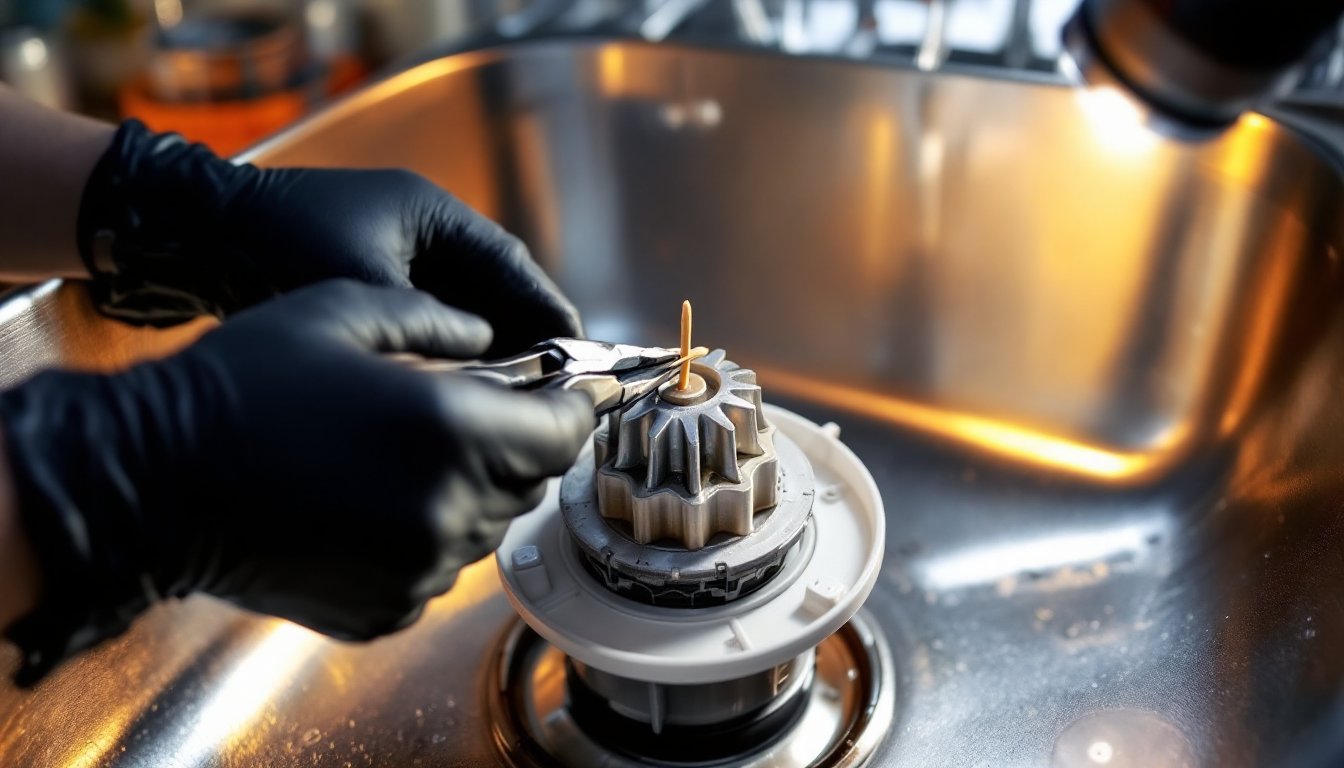
Next, inspect the sump area at the bottom of the tub. Remove the lower spray arm and the filter assembly (usually a twist-lock cylindrical filter and a flat fine-mesh screen). Beneath the filter, you’ll find the chopper blade or impeller. Shine a flashlight down into the sump and look for anything that doesn’t belong. Use needle-nose pliers or a shop vacuum to extract debris, never reach in bare-handed if there’s broken glass. Always wear cut-resistant gloves when working around the sump.
Failing Circulation Pump Motor
If the spray arms are clear, bearings look fine, and the grinding persists, the circulation pump motor may be wearing out. This pump forces water through the spray arms during the wash and rinse cycles. Over time, the motor bearings can fail, or the impeller blades inside the pump housing can crack or come loose.
A failing pump often produces a low, groaning grind that gets louder under load. You might also notice weaker spray pressure or dishes that aren’t getting clean. Testing the pump usually requires removing the lower access panel (underneath the dishwasher) and inspecting the motor assembly while the unit runs, this is where many DIYers hit their comfort limit.
Replacement circulation pumps range from $80–$200 for the part alone, and labor can add another $150–$250 if you hire out. Because pump replacement involves disconnecting water lines, electrical connectors, and sometimes the entire pump/motor assembly, it’s a two-to-three-hour job even for experienced tinkerers. If your dishwasher is over eight years old and the pump is failing, compare the repair cost to a new mid-range dishwasher ($400–$700) before committing to the fix.
How to Troubleshoot and Fix the Grinding Sound
Start with the simplest fixes and work toward the more involved repairs. Most grinding noises resolve without pulling the dishwasher out of the cabinet.
Step 1: Run an empty cycle and listen. Open the door mid-cycle (most models pause when you do this). If the grinding stops immediately, the sound is likely coming from the spray arms or pump area, not a rack or loose item banging around.
Step 2: Remove and inspect the spray arms. Pull out the lower rack. Twist or lift off the lower spray arm and examine the mounting hub and nozzles. Repeat for the upper spray arm. Rinse both thoroughly and spin them by hand to feel for rough spots or resistance.
Step 3: Clean the filter and sump. Remove the cylindrical filter and flat screen at the tub bottom. Rinse under hot water. Pull out the chopper blade cover (if your model has one) and inspect the impeller below. Remove any debris with pliers or tweezers. Reassemble everything and run a short rinse cycle.
Step 4: Check for loose hardware. Sometimes a screw or clip inside the tub comes loose and rattles against the pump housing. Run your hand (wearing gloves) along the tub bottom and sidewalls, feeling for anything out of place. Tighten any loose screws with a Phillips screwdriver.
Step 5: Test the pump bearing. If the grinding continues after clearing debris and replacing worn spray arms, the pump motor bearing is the likely culprit. To confirm, you’ll need to access the pump from below. Turn off power at the breaker, shut off the water supply under the sink, and remove the front lower access panel (typically two screws). With the panel off, have someone run a short cycle while you listen closely to the pump. A grinding or humming sound directly from the motor housing confirms a bearing or impeller issue.
Safety note: Always disconnect power before accessing internal components. Dishwashers run on 120V AC and pose a shock hazard if wiring is exposed or damaged.
If you’ve cleared debris and the noise persists, and you’re not comfortable pulling the pump, it’s time to call a pro. Many appliance maintenance tasks can be done with basic tools, but pump replacement crosses into the territory where a misaligned seal or kinked water line can cause a flood.
When to Call a Professional vs. DIY Repair
Clearing debris, swapping spray arms, and cleaning filters are well within the skillset of most DIYers. These repairs require minimal tools, usually just a screwdriver, pliers, and a flashlight, and cost under $50 in parts.
Call a professional if:
- The pump motor needs replacement. This involves disconnecting electrical wiring, water supply lines, and drain hoses, plus potentially removing the entire dishwasher from the cabinet. A misstep can lead to leaks or electrical shorts.
- You find water pooling under the unit. Grinding noises combined with leaks suggest a cracked pump housing or failed seal. This is a job for a licensed appliance repair tech.
- The dishwasher is still under warranty. DIY repairs can void manufacturer warranties, especially if you damage components in the process. Check your paperwork before opening anything.
- You’re not comfortable with electrical work. Dishwashers are hardwired or plug into a dedicated circuit. If you’ve never worked with household wiring, leave motor and control board diagnostics to someone who has.
DIY if:
- The grinding is new and intermittent. This almost always points to a foreign object, which is a 10-minute fix.
- You can see or feel the problem. Cracked spray arm hubs, clogged nozzles, and stuck impellers are visual/tactile issues that don’t require diagnostic tools.
- You have basic hand tools and a service manual. Most manufacturers provide free PDF service manuals online, search your model number plus “service manual.” These documents include exploded-view diagrams and torque specs.
A middle-ground option: hire a tech for diagnosis only (usually $75–$125 for a service call), then decide whether to DIY the actual repair once you know the root cause. Some appliance reviews highlight models with better repairability and parts availability, which can influence long-term ownership costs.
One more consideration: if the dishwasher is a budget model over 10 years old, and the repair estimate exceeds $200, replacement often makes more financial sense. Newer models are significantly more water- and energy-efficient, and many kitchen upgrades pair well with a dishwasher swap, updated cabinetry, countertops, or backsplash work.
Always get a flat-rate quote in writing before authorizing repairs. Hourly rates for appliance work range from $100–$150 depending on your market, and a simple pump swap can balloon if the tech encounters rusted fasteners or a nonstandard installation.
Conclusion
Most dishwasher grinding noises trace back to trapped debris, worn spray arm bearings, or a failing pump motor, all diagnosable with a flashlight and 20 minutes of inspection. Start with the easiest checks: pull the spray arms, clean the filter, and inspect the sump for foreign objects. If the grind persists and you’ve ruled out the simple stuff, weigh repair costs against the age and efficiency of the unit before committing to a pump replacement.