
Commercial rinse aids do their job, they help dishes dry faster and reduce water spots, but they’re not the only option. Whether you’re looking to reduce plastic packaging, skip synthetic surfactants, or just use what you already have in the pantry, there are effective alternatives that won’t leave your glassware looking like it survived a hard water baptism. These aren’t placebo solutions. When used correctly, natural rinse aid alternatives can match the performance of store-bought formulas, especially in moderately hard water conditions. The key is understanding how they work and setting realistic expectations for your specific dishwasher and water chemistry.
Table of Contents
ToggleKey Takeaways
- Dishwasher rinse aid alternatives like white vinegar and citric acid can match commercial performance in soft to moderately hard water while reducing cost and plastic waste.
- White vinegar works as an effective natural rinse aid by dissolving mineral buildup, though prolonged use may degrade rubber seals in some dishwashers.
- Citric acid solution is gentler on dishwasher components and outperforms vinegar in hard water conditions (above 7 grains per gallon).
- DIY rinse aid recipes can be customized for your water chemistry—soft water favors simple vinegar solutions, while hard water benefits from citric acid or salt-based formulas.
- Proper dispenser settings (start at 2–3 instead of the default 3 for commercial products) and regular cleaning ensure rinse aid alternatives perform effectively.
- Never mix hydrogen peroxide with vinegar in the same cycle, as the combination creates corrosive peracetic acid.
Why Look for Rinse Aid Alternatives?
Rinse aids are surfactants that lower the surface tension of water. This helps water sheet off dishes instead of beading up and leaving mineral deposits as it evaporates. Most commercial rinse aids contain synthetic chemicals like alcohol ethoxylates and citric acid, along with preservatives and dyes.
Some homeowners want to avoid these ingredients for environmental or health reasons. Others simply run out mid-cycle and need a quick fix. Cost is another factor, a bottle of name-brand rinse aid runs $6–$10 and lasts about 60 washes, while DIY alternatives cost pennies per load.
Performance expectations matter. If you have extremely hard water (above 10 grains per gallon), natural alternatives may not perform as well as commercial products without additional water softening. Check your local water report or use a test strip to know what you’re working with. Most municipal water systems publish annual water quality reports online.
Another reason people seek alternatives: ingredient transparency. Commercial rinse aids don’t always list every component on the label, and formulations change without notice. When you make your own or use single-ingredient alternatives, you know exactly what’s going into your dishwasher.
White Vinegar: The Most Popular Natural Rinse Aid
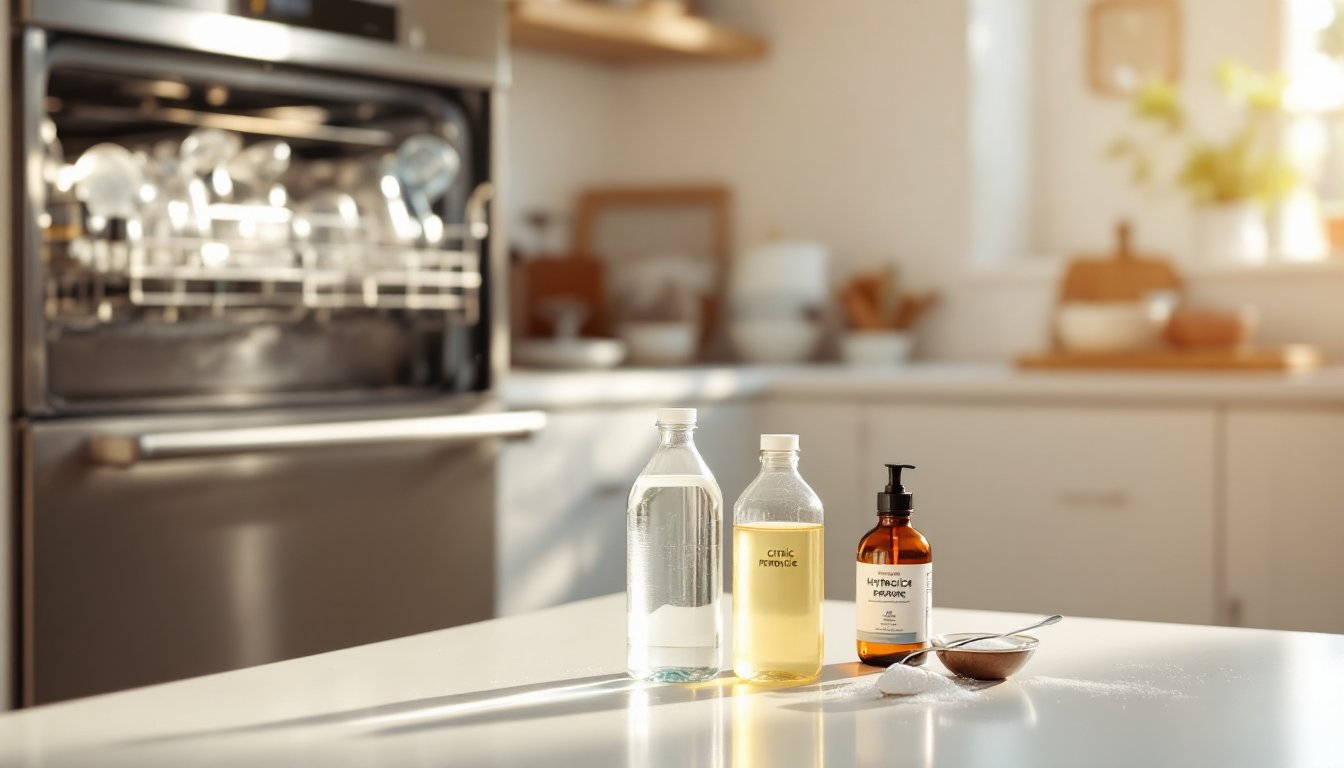
Distilled white vinegar is the most common homemade rinse aid for dishwashers. It’s acidic (pH around 2.4), which helps dissolve mineral buildup and works as a mild surfactant. The acetic acid cuts through soap residue and reduces spotting on glassware.
How to use it: Pour white vinegar directly into the rinse aid dispenser. Most dispensers hold 3–6 ounces. Set the rinse aid dial to the medium or lower setting, vinegar is thinner than commercial products and can over-dispense if set too high.
Pros:
- Cheap and widely available
- Biodegradable
- Effective in soft to moderately hard water
- Also helps clean dishwasher interior over time
Cons and considerations:
Some dishwasher manufacturers, including Bosch, warn that prolonged use of vinegar can degrade rubber gaskets and seals. The acidity may cause premature wear on certain materials. If you use vinegar regularly, inspect door seals every few months for cracking or stiffness.
Vinegar performs best when water hardness is below 7 grains per gallon. Above that, you may still see spotting, especially on glassware. It won’t eliminate etching, that’s caused by overly aggressive detergent or high heat, not rinse aid.
Don’t use apple cider vinegar or flavored vinegars. The sugars and additional compounds can leave residue or create odors. Stick with plain distilled white vinegar, 5% acidity.
Citric Acid Solution for Spotless Dishes
Citric acid is a natural chelating agent found in citrus fruits. It binds to mineral ions in hard water, preventing them from depositing on dishes. It’s gentler on dishwasher components than vinegar and often outperforms it in hard water conditions.
How to make citric acid rinse aid:
- Dissolve 1 tablespoon of food-grade citric acid powder in 1 cup of distilled water.
- Stir until fully dissolved. The solution will be clear.
- Pour into the rinse aid dispenser.
Adjust the concentration if needed. For very hard water, increase to 1.5 tablespoons per cup. For soft water, reduce to 1–2 teaspoons per cup. Many homeowners following cleaning hacks find citric acid works well for descaling tasks beyond dishwashers.
Where to buy citric acid: Look in the canning section of grocery stores, health food stores, or buy in bulk online. A one-pound bag costs $8–$12 and yields dozens of batches.
Storage: Citric acid solution lasts about two weeks at room temperature. Make small batches or store in the refrigerator to extend shelf life. Label clearly, it looks like water.
Advantages over vinegar: Citric acid is pH-neutral when diluted properly, so it’s less likely to damage seals. It also doesn’t carry any odor, even faint ones. Performance on hard water stains is noticeably better in side-by-side tests.
Hydrogen Peroxide as a Gentle Alternative
3% hydrogen peroxide (the stuff in the brown bottle at the drugstore) can function as a mild rinse aid. It helps with water sheeting and adds a sanitizing boost during the rinse cycle. It breaks down into water and oxygen, leaving no chemical residue.
How to use it: Pour 3% hydrogen peroxide directly into the rinse aid dispenser. Set the dispenser to a low or medium setting. Higher concentrations (6% or above) aren’t necessary and can bleach colored plasticware.
Best use cases:
- Households concerned about bacteria on cutting boards, baby bottles, or pet dishes
- Dishwashers with lingering odors (peroxide helps oxidize organic residues)
- Soft to moderately hard water environments
Limitations: Hydrogen peroxide is less effective at preventing mineral spots than vinegar or citric acid. It works best as a secondary benefit, sanitizing, while providing modest spot prevention. If your main concern is cloudy glassware, citric acid or vinegar will outperform it.
Replace peroxide every month or so if stored in the dispenser. Exposure to light degrades it, though most rinse aid dispensers are opaque. Buy in small bottles and refill as needed rather than storing a large jug long-term.
Safety note: Don’t mix hydrogen peroxide with vinegar in the same cycle or container. The combination creates peracetic acid, which is corrosive and can irritate skin and lungs. Use one or the other, not both.
DIY Rinse Aid Recipes You Can Make at Home
For those who want a custom homemade rinse aid for dishwasher performance, these DIY rinse aid for dishwasher recipes combine natural ingredients to target specific water conditions and household needs.
Recipe 1: All-Purpose DIY Rinse Aid
Ingredients:
- 1 cup distilled white vinegar
- 1 cup distilled water
- 1 tablespoon citric acid powder
- 10 drops lemon essential oil (optional, for scent)
Instructions:
- Mix all ingredients in a glass jar or bottle.
- Shake until citric acid dissolves completely.
- Pour into rinse aid dispenser or store in a labeled container.
This formula balances the acidic cleaning power of vinegar with the chelating ability of citric acid. The dilution with water reduces potential seal damage while maintaining effectiveness.
Recipe 2: Hard Water Formula
Ingredients:
- 1 cup distilled water
- 2 tablespoons citric acid powder
- 1 tablespoon kosher salt (acts as a water softener)
Instructions:
- Dissolve citric acid and salt in warm distilled water.
- Stir thoroughly and let cool.
- Use within two weeks.
Salt adds mild ion-exchange softening, which helps in areas with calcium and magnesium content above 8 grains per gallon. Some product reviewers at home appliance testing labs note that homemade formulas work surprisingly well when matched to local water chemistry.
Recipe 3: Ultra-Gentle (for new or high-end dishwashers)
Ingredients:
- 1 cup distilled water
- 1 teaspoon citric acid
- 1 teaspoon food-grade vegetable glycerin (acts as a surfactant)
Instructions:
- Combine ingredients in a bottle and shake.
- Use immediately or refrigerate up to three weeks.
Glycerin is available at pharmacies or baking supply stores. It’s gentle on components and provides modest sheeting action without acidity. Best for soft water or dishwashers with manufacturer warnings against acidic products.
Storage and safety: Store DIY rinse aids in opaque bottles away from direct sunlight. Label with contents and date. Keep out of reach of children and pets, even natural ingredients can be harmful if ingested in quantity.
How to Use Rinse Aid Alternatives Effectively
Using alternatives isn’t as simple as swapping bottles. Water hardness, detergent type, and dishwasher settings all affect results. Here’s how to optimize performance.
Check your rinse aid dispenser setting. Most dishwashers have an adjustable dial (1–5 or 1–6). Commercial rinse aids are formulated for setting 3. Natural alternatives are often thinner, so start at setting 2 and adjust up if you see spotting. Vinegar and citric acid solutions typically work best at settings 2–3.
Test water hardness. Hard water (above 7 grains per gallon) requires stronger solutions or supplemental water softening. Install a whole-house softener or use a dishwasher with a built-in softener and salt reservoir. Test strips cost under $10 and give immediate results.
Match detergent to your alternative. If you’re using acidic alternatives like vinegar or citric acid, pair them with a pH-neutral or mildly alkaline detergent. Highly alkaline detergents combined with acidic rinse aids can neutralize each other, reducing cleaning power. Following comprehensive home improvement guides can help you balance product chemistry for better outcomes.
Don’t skip the heated dry cycle. Natural rinse aids rely on heat to fully activate their sheeting properties. If you normally use air-dry to save energy, expect slightly more spotting. The heated dry cycle helps water evaporate cleanly, especially with vinegar-based solutions.
Clean the rinse aid dispenser monthly. Residue from DIY formulas can build up faster than commercial products, especially recipes containing glycerin or salt. Remove the dispenser cap and wipe with a damp cloth. Flush with warm water to clear the fill tube.
Watch for over-dispensing. If you notice sudsy residue on dishes or a film on glassware, your dispenser is releasing too much product. Lower the setting by one notch. Natural alternatives are often more concentrated than commercial rinse aids in terms of active ingredients per ounce.
Run a cleaning cycle quarterly. Use a dishwasher cleaner or run an empty cycle with 2 cups of white vinegar on the bottom rack. This clears mineral buildup from spray arms, filters, and the interior, which improves overall performance regardless of rinse aid choice.
Conclusion
Natural rinse aid alternatives work, if you match the solution to your water and adjust your expectations. White vinegar handles everyday loads in soft water. Citric acid tackles hard water minerals. DIY recipes let you customize for specific needs. The trade-off is slightly more effort and attention to dispenser settings, but the cost savings and ingredient control make it worthwhile for many households. Test one alternative for a month, monitor results, and adjust as needed.