

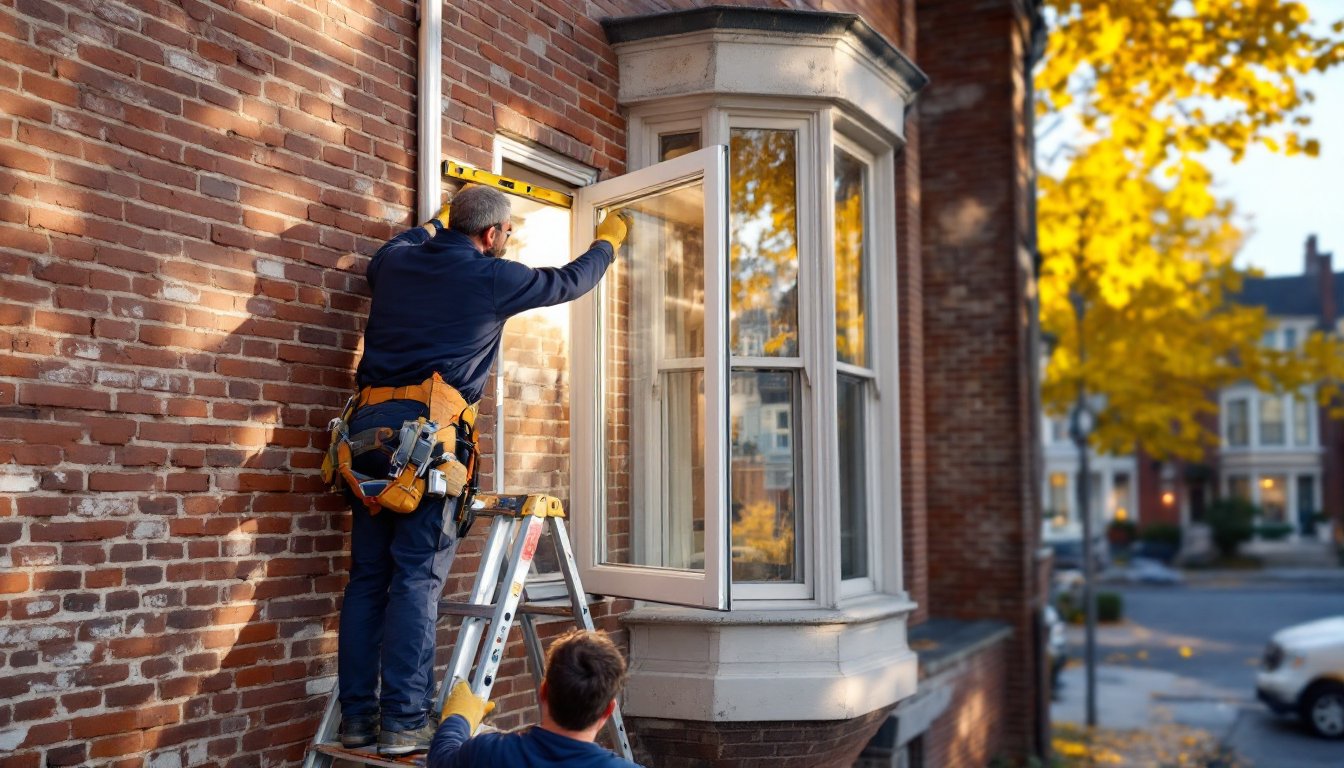
Boston’s freeze-thaw cycles, salt air near the coast, and heavy nor’easters put serious strain on windows. If you’re feeling drafts by October, noticing condensation between panes, or watching your heating bill climb every winter, it’s time to consider replacement. This guide covers what Boston homeowners need to know about window replacement: realistic costs for 2026, which materials hold up best in New England weather, timing your project around the seasons, and how to hire a contractor who won’t leave you high and dry mid-job.
Table of Contents
ToggleKey Takeaways
- Window replacement in Boston typically costs $600–$1,200 per window for mid-grade vinyl or fiberglass units, with full-house projects ranging $9,000–$18,000+ depending on materials and complexity.
- Air leakage, condensation between panes, rotted frames, and high energy costs are the main drivers of window replacement in Boston’s freeze-thaw climate.
- For Boston’s climate, prioritize low-E coatings with argon-filled double-pane windows with a U-factor of 0.30 or lower and SHGC between 0.25–0.35 for optimal performance.
- Late spring through early fall (May–October) offers the best weather for window replacement, with early fall providing lower pricing and fewer scheduling delays than peak summer season.
- Verify contractor licensing (HIC registration), insurance, and manufacturer certifications before hiring, and always get three detailed written estimates comparing window brands, glass specifications, and warranty coverage.
- Insert (pocket) replacement is suitable for DIY on accessible first-floor windows if the frame is sound, while full-frame replacement should be left to professionals due to complexity and risk of water damage if flashing is installed incorrectly.
Why Boston Homeowners Replace Their Windows
Most window replacements in Boston aren’t cosmetic upgrades, they’re responses to functional failures. The most common trigger is air leakage. Older single-pane units or failed double-pane seals let cold air whistle through, forcing heating systems to work overtime. You’ll feel it first around the sash and at the bottom rail.
Condensation between glass panes signals a broken seal. Once that argon or krypton gas escapes, the insulating value drops and moisture gets trapped inside. You can’t fix this, the insulated glass unit (IGU) needs replacement.
Rotted sills and frames are another driver, especially on wood windows that weren’t maintained. Water intrusion from ice dams or wind-driven rain accelerates decay. If you can push a screwdriver into the sill easily, the window’s structural integrity is compromised.
Energy costs matter too. Windows account for roughly 25-30% of heating and cooling loss in a typical home. Replacing drafty windows with low-E, argon-filled double- or triple-pane units can cut that loss significantly. In Boston’s climate, payback periods on energy-efficient windows typically run 8-12 years, depending on fuel costs and the condition of what you’re replacing.
Finally, some homeowners replace windows before selling. Curb appeal counts, and new windows signal that the house has been cared for. It’s not the highest-ROI renovation, but it removes a negotiating point and can speed up a sale.
Average Window Replacement Costs in Boston
In 2026, expect to pay $600 to $1,200 per window for professional installation of mid-grade vinyl or fiberglass windows in Boston. That’s a typical range for standard double-hung units. Premium materials (wood-clad, triple-pane, or custom sizes) push costs to $1,500 or more per window.
For a whole-house project, say, 15 windows, budget $9,000 to $18,000 for vinyl, or $15,000 to $30,000+ for wood or composite frames with high-performance glass packages. These figures include removal of old units, installation, exterior trim work, and basic interior finishing. Structural repairs (rotted framing, header issues) run extra.
Boston’s labor rates tend to run 10-15% above the national average due to cost of living and demand. Permit fees (typically $50-$150 depending on scope) and disposal of old windows add minor line items.
Factors That Affect Your Total Price
Window material has the biggest impact. Vinyl is least expensive and low-maintenance but offers fewer color options. Fiberglass costs more upfront but resists expansion/contraction better in temperature swings. Wood and wood-clad units deliver classic looks and superior insulation but require periodic maintenance and cost the most.
Glass package is next. Standard double-pane with low-E coating is the baseline. Add argon or krypton fill, triple glazing, or impact-resistant glass, and costs climb. For Boston winters, double-pane with low-E and argon is the sweet spot for most homes.
Window style and size matter. Double-hung and casement windows in common sizes are cheapest. Bay, bow, picture, or custom shapes require more labor and materials. Anything non-standard gets quoted individually.
Installation complexity varies. First-floor windows on a ranch are straightforward. Second- or third-story installations need scaffolding or lifts. Brick or stone exteriors require more careful flashing and sealing than wood siding. If the rough opening needs rebuilding, add several hundred dollars per window.
Scope and timing influence pricing too. Contractors often discount whole-house jobs compared to one-off replacements. Off-season work (late fall, winter) sometimes brings lower rates, though weather can delay installation.
Choosing the Right Window Types for Boston’s Climate
Boston window replacement requires materials that handle freeze-thaw cycles, humidity swings, and occasional hurricane-force winds. Not every window marketed as “energy-efficient” performs equally in New England.
Double-hung windows remain the most common choice. They fit traditional New England architecture, offer top and bottom ventilation, and tilt in for cleaning. Look for fusion-welded vinyl corners (not mechanically fastened) and multi-chamber frames for better insulation.
Casement windows seal tighter than double-hung when closed, making them excellent for energy performance. The crank mechanism pulls the sash against the frame, compressing the weatherstripping. They’re ideal for hard-to-reach spots (over sinks or counters) but require clearance to swing outward.
Awning and hopper windows work well for basements or bathrooms. Awnings hinge at the top and open outward, allowing ventilation even during light rain. Hoppers hinge at the bottom and open inward, useful in below-grade installations.
For glass, prioritize low-emissivity (low-E) coatings and argon gas fill. Low-E reflects infrared heat back into the room during winter and blocks it in summer. Argon fill between panes improves insulation over plain air. Triple-pane units offer marginal gains in Boston’s climate unless you’re in an extremely exposed location or pursuing Passive House standards, the added cost and weight usually aren’t justified.
U-factor and Solar Heat Gain Coefficient (SHGC) are the key performance specs. For Boston, target a U-factor of 0.30 or lower (lower is better for insulation) and an SHGC between 0.25 and 0.35 (moderate solar heat gain). Higher SHGC suits north-facing windows: lower suits south- and west-facing to reduce summer cooling loads.
Frame material selection depends on priorities. Vinyl dominates the market for its balance of cost, performance, and durability. It won’t rot, doesn’t need painting, and insulates well. Fiberglass costs more but expands and contracts less than vinyl, maintaining tighter seals over decades. Wood-clad or aluminum-clad wood windows offer natural beauty inside with weather-resistant exteriors, but they’re pricier and require occasional maintenance on interior surfaces.
Best Time of Year to Replace Windows in Boston
Late spring through early fall (May through October) offers the most reliable window replacement weather in Boston. Installers can work efficiently, adhesives and sealants cure properly, and you won’t have an open hole in your wall during a February blizzard.
Summer (June-August) is peak season. Contractors are busy, lead times stretch to 8-12 weeks, and pricing tends to be highest. But weather is predictable, and installations move quickly. If you’re scheduling summer work, book by March or April.
Early fall (September-October) is often ideal. Contractors’ schedules loosen up after the summer rush, weather is still mild, and you’ll have new windows sealed before heating season. Lead times drop, and you may find better pricing or availability. Just watch the forecast, installers need at least a few hours of dry weather to complete flashing and exterior sealing.
Late fall and winter are possible but riskier. Temperatures below 40°F interfere with sealant curing and expanding foam application. Snow, ice, and short daylight hours slow progress. Some contractors offer discounts for off-season work, but you’ll need to tolerate temporary coverings (tarps, plywood) if installation spans multiple days. Only consider winter replacement if you have an urgent failure (broken glass, severe air leakage) and can’t wait.
Spring (April-May) is a compromise. Weather is improving, but New England springs are unpredictable. Rain delays are common. If your schedule is flexible, it’s a decent window (pun intended) for competitive pricing before summer demand spikes.
One practical tip: order windows well ahead of your target installation date. Even in slower seasons, custom sizes or premium materials can take 6-10 weeks to manufacture and ship.
How to Choose a Window Replacement Contractor in Boston
Start with references and reviews. Ask neighbors who’ve had work done recently, and check platforms like Angi for verified customer feedback. Look for patterns in reviews, occasional complaints happen, but repeated issues with communication, cleanup, or warranty service are red flags.
Verify licensing and insurance. Massachusetts requires a Home Improvement Contractor (HIC) registration for most residential work over $1,000. Confirm the contractor carries general liability and workers’ compensation insurance. Ask for certificates and call to verify they’re current. If someone gets hurt on your property and the contractor isn’t insured, you could be liable.
Get at least three written estimates. Detailed bids should specify window brand and model, glass package (U-factor, SHGC, low-E type), installation method (insert vs. full-frame), warranty coverage (both manufacturer and labor), and payment schedule. Vague line items or prices significantly below others warrant scrutiny.
Manufacturer certifications matter. Companies certified by Pella, Andersen, Marvin, or other major brands have met training standards and can offer better warranty support. Certification doesn’t guarantee quality, but it’s a useful filter.
Ask about installation method. Full-frame replacement removes the entire window including jambs, allowing inspection and repair of the rough opening. It’s more invasive but necessary if framing is damaged. Insert (pocket) replacement fits a new sash into the existing frame, preserving interior and exterior trim, faster and cheaper but only suitable if the frame is sound. Many contractors default to insert installs to save time: make sure the method matches your needs.
Clarify the warranty. Manufacturers typically offer 20 years to lifetime on glass and 10-20 years on frames and hardware. But labor warranties vary widely, some contractors offer 1 year, others 5-10. Get it in writing.
Red flags: pressure to sign immediately, requests for large upfront payments (Massachusetts law limits deposits to one-third or $1,000, whichever is less), lack of a physical business address, or unwillingness to provide references.
DIY vs. Professional Window Replacement: What Boston Homeowners Should Know
DIY window replacement is feasible for homeowners with carpentry skills and the right tools, but it’s not a beginner project. You’re working with heavy units (double-hung windows weigh 40-80 pounds each), precision tolerances (1/8-inch gaps matter), and exterior weatherproofing that can cause expensive damage if done wrong.
Insert replacement kits are the most DIY-friendly option. These fit into the existing frame, so you skip demolition and exterior work. You’ll need basic tools, drill, level, shims, caulk gun, utility knife, and the ability to measure accurately. Manufacturers like Pella and Andersen sell direct-to-consumer kits with instructions. Budget a half-day per window if you’re new to the process.
Full-frame replacement requires more skill. You’ll cut interior and exterior trim, remove the old jambs, possibly rebuild the rough opening, install flashing and moisture barriers, shim and level the new unit, insulate gaps with low-expansion foam, and reinstall or replace trim. Mistakes in flashing or air sealing lead to water intrusion, mold, and rot. If you’re not confident working with exterior cladding and understanding wall assemblies, hire a pro.
Safety considerations: You’ll need fall protection for second-story work. OSHA standards (which apply to pros) require fall arrest systems for heights above 6 feet: homeowners aren’t bound by OSHA but the physics are the same. Use scaffolding or a stable ladder with a second person spotting. Wear safety glasses and work gloves, broken glass and sharp metal edges are inevitable.
Permit requirements vary by municipality. Some Boston-area towns require permits for window replacement, especially if you’re changing sizes or affecting structural elements. Check with your local building department before starting. DIYers are held to the same code standards as contractors.
Cost comparison: A mid-grade vinyl double-hung window costs $200-$400 retail (less online, more at local suppliers). Professional installation adds $200-$500 per window depending on complexity. If you’re replacing 10 windows, you might save $2,000-$5,000 doing it yourself, but factor in tool rentals, materials for trim and flashing, and the value of your time. And if you mess up flashing or air sealing, repair costs can erase savings.
Most homeowners split the difference: hire a pro for full-frame replacements, especially multi-story installations, and consider DIY for simple insert replacements on accessible first-floor windows. For guidance on project planning and costs, many resources break down what to expect before you commit.
Bottom line: DIY window replacement saves money if you have skills and time. But poor installation compromises energy performance, durability, and weather resistance. When in doubt, get quotes from qualified local contractors and weigh the cost against the risk of doing it wrong.