

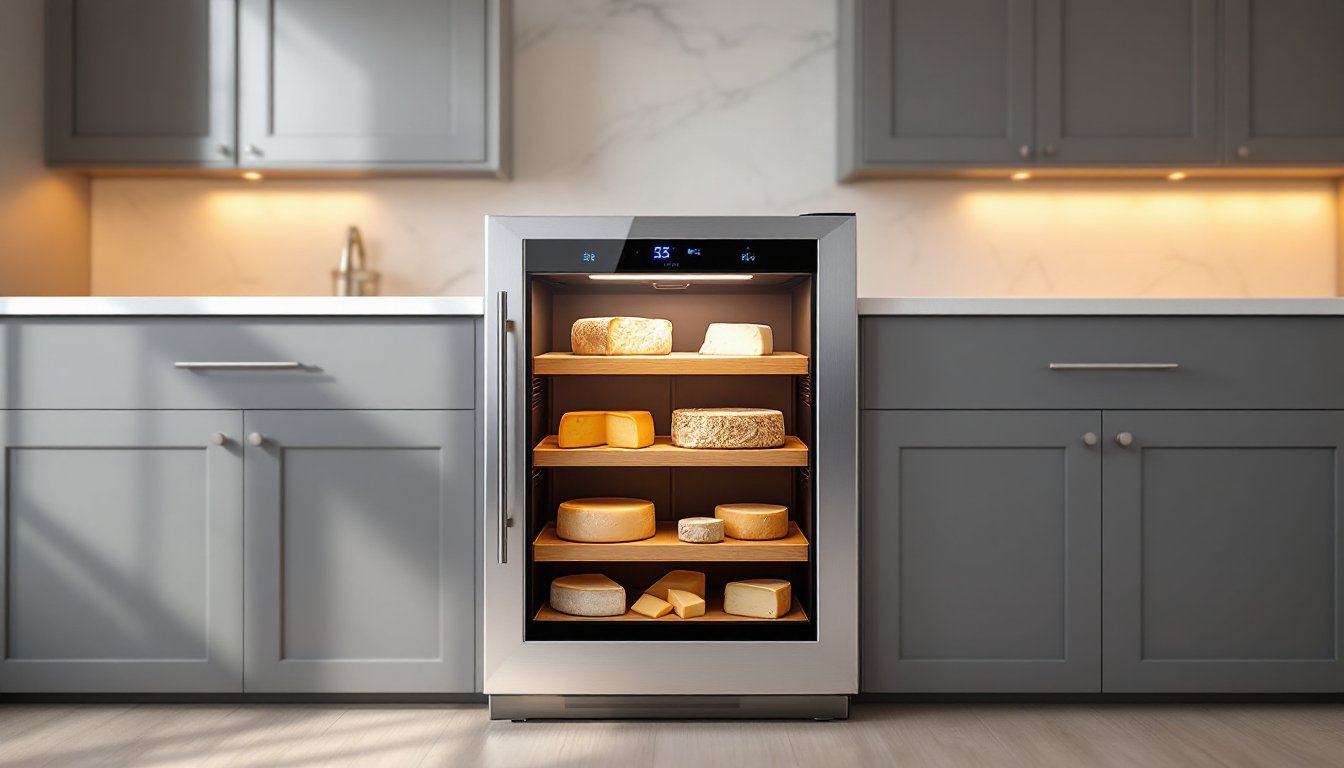
A dedicated cheese refrigerator isn’t just for restaurants and specialty shops anymore. Serious cheese enthusiasts, and anyone tired of finding dried-out cheddar or moldy brie in the back of the fridge, are installing these compact units in home kitchens, pantries, and even wet bars. Unlike a standard refrigerator that cycles between 35°F and 40°F with fluctuating humidity, a cheese refrigerator maintains precise temperature and moisture levels that keep cheese aging gracefully instead of spoiling prematurely. Whether someone’s building out a serious cheese cave or just wants their weekly Costco haul to last longer, understanding how these units work and where they fit makes all the difference.
Table of Contents
ToggleKey Takeaways
- A cheese refrigerator maintains ideal storage conditions at 50°F–55°F with 80–95% humidity, preventing cheese from drying out or spoiling compared to standard kitchen refrigerators.
- Choose between undercounter built-ins ($800–$2,500), freestanding compact units ($300–$1,200), or repurposed wine coolers based on your storage needs and kitchen layout.
- Compressor-based cheese refrigerators handle larger capacities and temperature recovery better, while thermoelectric models run quieter but need climate-controlled environments.
- Digital temperature controls with ±1°F precision and built-in hygrometers are non-negotiable features to verify your cheese refrigerator maintains proper conditions.
- Monthly maintenance includes refilling humidity reservoirs with distilled water and inspecting door seals, while quarterly descaling and annual deep cleaning prevent equipment failure and preserve cheese quality.
- Proper placement in kitchens, pantries, or entertainment spaces—avoiding garages and direct sunlight—ensures consistent performance and actually encourages regular use of your cheese refrigerator.
What Is a Cheese Refrigerator and Why Do You Need One?
A cheese refrigerator is a specialized cooling appliance designed to store cheese at optimal temperature and humidity levels, typically 50°F to 55°F with 80% to 95% relative humidity. Standard refrigerators run too cold and too dry, which causes cheese to lose moisture, develop off-flavors, and harden prematurely.
Most cheese fridges are compact units (ranging from 1.5 to 6 cubic feet) that fit under counters, in pantries, or alongside wine coolers. They use thermoelectric or compressor-based cooling with built-in humidity control, either through water reservoirs, humidity trays, or automated misting systems.
Who actually needs one? Anyone who regularly buys artisan or aged cheeses, entertains frequently, or simply hates wasting expensive cheese. A $300 wedge of aged Gruyère shouldn’t end up in the trash because it dried out in three weeks. Proper storage extends shelf life by months and preserves flavor complexity.
That said, casual cheese eaters who go through a block of cheddar in a week don’t need a dedicated unit. Standard fridge storage works fine for pre-packaged, high-turnover cheese. But if someone’s buying from a cheesemonger, aging cheese at home, or stocking multiple varieties, a cheese fridge pays for itself in reduced waste.
Key Features to Look for in a Cheese Refrigerator
Not all cheese refrigerators are created equal. Here’s what separates a solid unit from a glorified wine cooler.
Capacity and shelving: Most home units range from 1.5 to 4 cubic feet, holding anywhere from 20 to 60 pounds of cheese. Look for adjustable or removable shelves, preferably wood or coated wire, that allow airflow. Glass shelves trap moisture and promote mold growth in the wrong spots.
Door material: Glass doors look sharp and let someone check inventory without opening the unit, but they require UV-filtering glass to prevent light degradation. Solid stainless or panel-ready doors offer better insulation and temperature stability.
Compressor vs. thermoelectric: Compressor units handle larger capacities and recover temperature faster after the door’s been open. Thermoelectric models run quieter and vibration-free (important for delicate aging processes) but struggle in warm ambient environments. If the unit’s going in a climate-controlled kitchen, thermoelectric works. In a garage or unheated pantry, go compressor.
Noise level: Cheese fridges typically run 35 to 45 decibels, about as loud as a quiet library. If it’s going in an open-plan kitchen or near a living space, check manufacturer specs.
Digital controls: Analog dials are harder to calibrate. Digital thermostats with 0.5°F precision make dialing in the perfect environment straightforward. Some higher-end models include smartphone connectivity, though that’s overkill for most home users.
Temperature and Humidity Control
This is the make-or-break feature. Cheese needs consistent, narrow-range temperature control. Look for units with independent temperature and humidity adjustments.
Temperature should hold steady within ±1°F of the setpoint. Wider swings cause condensation, which leads to surface mold and texture breakdown. Most quality units use dual-zone or single-zone cooling: dual-zone models let someone store soft cheeses at 52°F and hard aged varieties at 55°F simultaneously.
Humidity control separates cheese fridges from wine coolers. Proper humidity control systems prevent cheese from drying out while avoiding excess moisture that fuels unwanted mold. Some units use passive humidity trays (requiring manual refills), while others have active humidifiers with reservoirs. Active systems are more consistent but need monitoring, let the reservoir run dry, and the unit becomes a regular fridge.
A built-in hygrometer is non-negotiable. Without it, there’s no way to verify the unit’s actually maintaining the right environment. Cheap units skip this: quality models include digital readouts.
Best Types of Cheese Refrigerators for Home Use
Cheese refrigerators fall into a few categories, each suited to different needs and budgets.
Undercounter built-ins: These 24-inch-wide units slide under standard countertops (with 34.5-inch height clearance) and offer 3 to 6 cubic feet of storage. They’re front-vented, so they don’t need side clearance. Expect to pay $800 to $2,500. Installation is straightforward, level the unit, plug it in, and adjust the feet. No hardwiring or water lines required. Best for serious collectors integrating a cheese station into a kitchen remodel.
Freestanding compact refrigerators: Smaller footprint (18 to 20 inches wide), typically 1.5 to 3 cubic feet. These sit on countertops or floors and need rear ventilation clearance (2 to 4 inches). Prices range $300 to $1,200. They’re the most flexible option, move them between kitchen, pantry, or basement as needed. Good entry point for someone testing the waters.
Repurposed wine coolers: Some dual-zone wine fridges can double as cheese storage if they offer humidity control and reach 50°F to 55°F. Not all do, many wine coolers bottom out at 45°F and run dry inside. Check specs carefully. If converting an existing wine cooler, add a humidity tray (a shallow dish with a damp sponge works) and verify temps with a separate thermometer. This approach saves money but requires more monitoring.
DIY conversion kits: Advanced DIYers sometimes convert old dorm fridges or beverage coolers using aftermarket thermostats and ultrasonic humidifiers. It’s possible, but tricky, getting stable humidity without over-humidifying requires trial and error, and temperature cycling on cheap compressors can cause issues. Only worth it if someone already has the fridge and enjoys tinkering. Not recommended for anyone storing expensive cheese.
For most homeowners, a freestanding compact unit offers the best balance of performance, cost, and flexibility.
Where to Place Your Cheese Refrigerator in Your Home
Location affects both performance and convenience. A cheese fridge stuck in a hot garage will struggle: one buried in a basement won’t get used.
Kitchen placement: Undercounter units fit beside standard base cabinets. Ensure the floor is level (use a 4-foot level and adjustable feet) and allow 1/4-inch clearance on panel-ready models for door swing. Freestanding units can sit on counters but check weight capacity, a loaded 3-cubic-foot fridge weighs 80 to 100 pounds. Granite and quartz handle it fine: butcher block may sag over time without reinforcement.
Pantries and butler’s pantries: Ideal for freestanding models. They’re out of the main kitchen traffic flow but still accessible. Ensure adequate ventilation, rear-vented units need 3 to 4 inches behind them. Check that the pantry stays between 60°F and 75°F: extreme ambient temps force the compressor to work harder and shorten lifespan.
Basements: Cool, stable temps make basements attractive, but humidity can be an issue. If the basement runs damp (common in older homes), the fridge may struggle to maintain internal humidity balance. Use a dehumidifier in the space if relative humidity exceeds 65%. Also consider convenience, if the fridge is two floors down, it won’t get used for everyday access.
Wet bars and entertainment spaces: Popular for homeowners who entertain. Pairing a cheese fridge with a wine cooler or beverage center creates a self-contained serving station, as suggested by many kitchen design layouts. Ensure there’s a dedicated 15-amp circuit, don’t daisy-chain multiple cooling appliances on the same outlet.
Avoid: Garages (temperature swings), exterior walls in uninsulated spaces (same reason), and anywhere in direct sunlight. Heat is the enemy of consistent performance.
Plug the unit into a grounded three-prong outlet. Don’t use an extension cord, compressor startup draw can trip lower-gauge cords and create a fire hazard.
How to Maintain and Clean Your Cheese Refrigerator
A cheese fridge requires more hands-on maintenance than a standard refrigerator, mostly due to humidity systems and the nature of what’s being stored.
Monthly tasks:
-
Check and refill the humidity reservoir. Most units hold 8 to 16 ounces of water. Use distilled water to prevent mineral buildup. Tap water leaves deposits that clog misters and reduce efficiency.
-
Wipe down shelves and interior surfaces with a damp cloth and mild dish soap. Avoid harsh cleaners or bleach, residual odors transfer to cheese. Dry thoroughly to prevent excess moisture.
-
Inspect door seals. Close the door on a dollar bill: if it pulls out easily, the gasket needs adjustment or replacement. Leaky seals cause temperature swings and overwork the compressor.
-
Remove any spoiled or overly moldy cheese immediately. While some mold is normal (and desirable) on certain cheeses, aggressive mold growth spreads fast in humid environments.
Quarterly tasks:
-
Clean the condenser coils (if accessible). Dust buildup reduces efficiency. Unplug the unit, locate the coils (usually rear-mounted), and vacuum or brush them gently. Use a coil brush or soft paintbrush, don’t bend the fins.
-
Descale the humidifier (if applicable). Mineral deposits accumulate even with distilled water. Remove the humidity tray or mister unit and soak in a 1:1 white vinegar and water solution for 30 minutes. Rinse thoroughly.
-
Recalibrate the thermostat if needed. Place an independent refrigerator thermometer inside and compare readings after 24 hours. If there’s a 2°F or greater discrepancy, consult the manual for calibration steps or contact the manufacturer.
Annually:
- Deep clean the entire interior. Remove all shelves, wash with warm soapy water, and air-dry completely before reinstalling.
- Check the drain pan (if equipped). Some units have condensation pans that need emptying or cleaning.
PPE: Wear nitrile gloves when handling moldy cheese or cleaning heavily soiled interiors. Some mold spores can irritate skin or lungs.
Troubleshooting common issues:
- Cheese drying out: Humidity too low. Refill reservoir, check for leaks in the humidity system, or add a shallow dish of water inside.
- Excessive mold growth: Humidity too high or poor air circulation. Reduce humidity setting, ensure shelves aren’t overcrowded, and verify the door seals properly.
- Temperature fluctuations: Dirty condenser coils, frequent door openings, or a failing thermostat. Clean coils first: if the problem persists, test with an independent thermometer and contact support.
Most manufacturers recommend professional servicing every 2 to 3 years for compressor units, though thermoelectric models require less intervention. Keep the original manual and warranty info, humidity systems and compressors are the most common failure points, and many units carry 1- to 3-year warranties covering parts and labor.
For anyone researching appliance reviews and longevity, resources like CNET offer detailed breakdowns on compressor reliability and component quality across brands.
Conclusion
A cheese refrigerator is a practical upgrade for anyone serious about cheese quality and longevity. It’s not a luxury appliance, it’s a tool that prevents waste, preserves flavor, and pays for itself over time. Choose a model based on capacity needs, kitchen layout, and how hands-on someone’s willing to be with maintenance. Proper placement and consistent upkeep ensure the unit performs reliably for years, turning a corner of the kitchen into a dedicated aging space that rivals any cheesemonger’s cooler.