

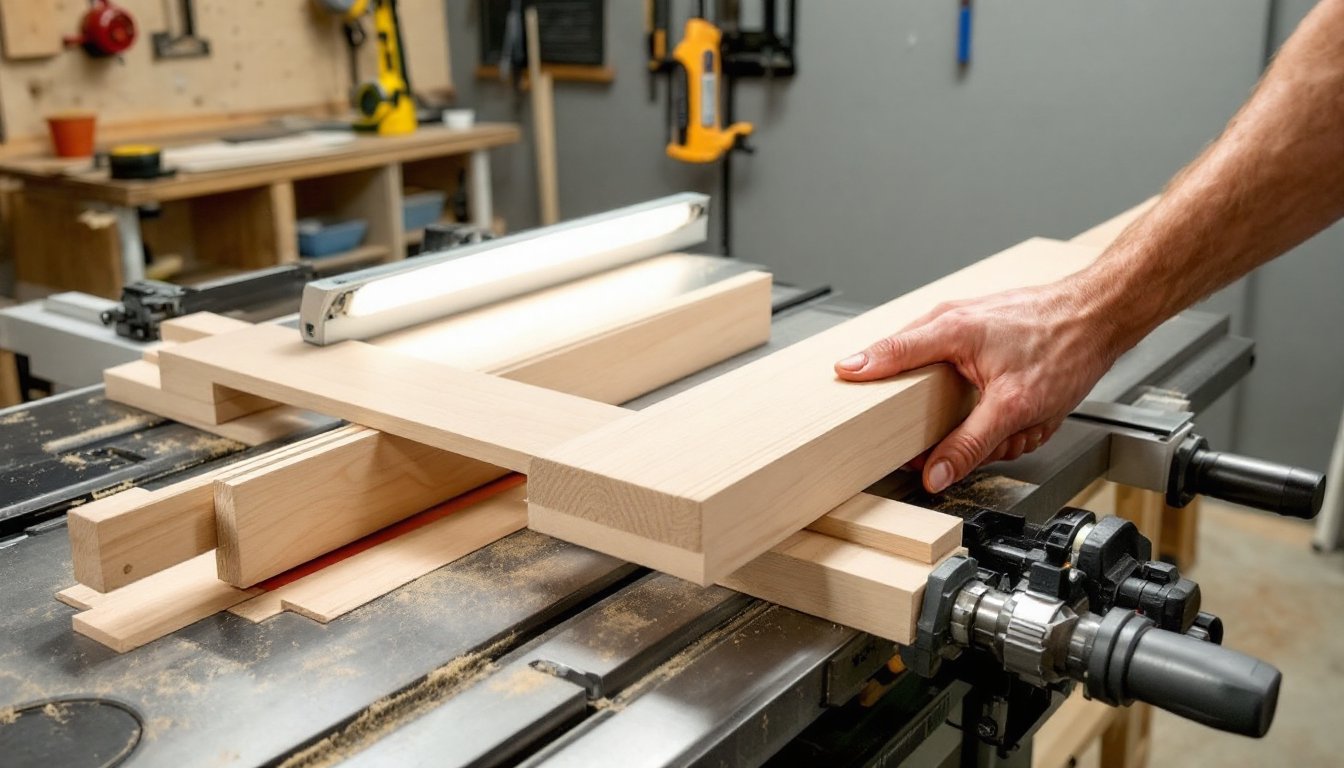
A table saw miter sled is one of those jigs that makes you wonder how you ever managed without it. Unlike a standard miter gauge, which can wobble and limit your workpiece size, a well-built sled locks in precise 45-degree cuts for picture frames, box corners, and trim work. The runner glides smoothly in the miter slot, while dual fences hold your stock at exact angles. Best part? You can build a reliable version in an afternoon with scrap plywood and a few careful measurements. Once you dial it in, repetitive miters become dead-simple and consistent.
Table of Contents
ToggleKey Takeaways
- A table saw miter sled solves the limitations of standard miter gauges by providing a stable, wide platform that eliminates wobble and supports larger workpieces for precise 45-degree cuts.
- You can build a reliable miter sled in an afternoon using 3/4-inch plywood, hardwood runners, and two fences positioned at opposing 45-degree angles for perfect corner joints.
- The five-cut test method is essential for achieving accuracy—cut five miters, flip and nest them, then measure gaps to reveal angular errors invisible to the naked eye.
- Proper technique, including snug runner fit, support boards for long stock, and stop blocks for repeats, ensures consistent, repeatable results on every cut.
- Avoid common mistakes like over-tightening fence screws, ignoring grain direction, skipping calibration, and attempting rip cuts, which create safety risks and poor results.
- Once dialed in, a table saw miter sled dramatically improves cut quality and workflow, paying for itself on the first picture frame, shadow box, or trim project that requires crisp miters.
What Is a Table Saw Miter Sled and Why You Need One
A miter sled is a shop-made jig that rides in your table saw’s miter slot, featuring two fences set at opposing 45-degree angles. Unlike the stamped-metal miter gauge that came with your saw, a sled provides a broad, stable platform that supports larger workpieces and eliminates side-to-side play.
The sled consists of a flat base (typically 3/4-inch plywood or MDF), hardwood runner bars that fit your saw’s miter slots, and two tall fences positioned to create perfect 90-degree corner joints when you miter both ends of a board. Many woodworkers who follow detailed workshop jigs and tutorials find that a dedicated miter sled dramatically improves cut quality over handheld miter gauges.
Why build one? Standard miter gauges have two weak points: limited fence height means tall stock tips easily, and the single-point contact with the slot allows flex during the cut. A sled solves both. The wide base keeps everything flat against the table, and the twin fences let you flip a board from left to right fence, guaranteeing matching miters without resetting any angles. If you’re assembling picture frames, shadow boxes, or any project requiring crisp 45-degree corners, this jig pays for itself on the first build.
Essential Materials and Tools for Building Your Miter Sled
Gather materials before you start so you’re not hunting for hardware mid-build. Most of these are shop staples:
Materials:
• One sheet of 3/4-inch Baltic birch or cabinet-grade plywood, at least 24 × 30 inches for the base
• Hardwood runner stock: 1/2 × 3/4-inch hardwood (oak or maple) or pre-made miter bars to fit your saw’s slots
• Two pieces of hardwood for fences, roughly 3/4 × 3 inches × 18 inches (poplar or maple work well)
• Wood glue (Titebond II or III)
• 1-1/4-inch flathead wood screws for attaching fences
• Sandpaper (120 and 220 grit)
• Paste wax or dry lubricant for the runners
Tools:
• Table saw (obviously)
• Combination square and framing square
• Drill/driver with countersink bit
• Clamps (at least four bar clamps)
• A reliable 45-degree drafting triangle or precision angle gauge
• Block plane or sander for fitting runners
• Safety glasses and hearing protection
Runner fit is critical. Measure your miter slots with calipers if you have them, most are 3/4 inch wide, but depth and tolerance vary by saw model. If your hardwood stock is slightly oversized, plan to plane or sand it to a snug sliding fit with zero side play.
Step-by-Step Guide to Building a Basic Miter Sled
This build assumes you’re working with a saw that has standard 3/4-inch miter slots spaced roughly 12 inches apart. Adjust dimensions to fit your specific machine.
Cutting the Base and Runner Bars
-
Cut the plywood base. Start with a rectangle roughly 24 inches wide × 30 inches deep. The exact size is flexible: just ensure it’s large enough to support your typical workpieces and doesn’t extend past your saw table edges when centered over the blade.
-
Mill or purchase runner bars. If milling your own, rip hardwood strips to 1/2 inch thick × 3/4 inch wide. Test-fit each runner in the miter slots, it should slide smoothly without rocking. Use a block plane to shave high spots, checking frequently. Aim for a sliding fit that doesn’t bind but has no lateral wiggle. Those building multiple woodworking jigs for the shop often mill several runners at once to speed up future projects.
-
Attach runners to the base. Apply a thin bead of glue along the top of each runner, then set them into the miter slots. Lower the plywood base onto the runners, pressing firmly. Drive 1-inch screws from the topside into the runners, keeping screws at least 2 inches from the blade path. Let the glue cure with the assembly still on the saw to ensure perfect alignment.
-
Trim the base. Once dry, raise the blade and make a shallow cut through the center of the sled base, stopping about 6 inches from the front edge. This kerf becomes your zero-clearance reference line.
Installing the Fences at Perfect Angles
-
Square the first fence. Place one fence blank across the sled, perpendicular to the kerf. Use a framing square against the kerf to confirm 90 degrees, then clamp it down. Pre-drill and countersink holes, then attach with 1-1/4-inch screws from underneath the base. Do not glue yet, you may need to fine-tune.
-
Set the second fence at 45 degrees. This is where precision matters. Measure from the blade kerf to position the second fence so its inside edge forms a 45-degree angle relative to the first fence. A quality drafting triangle or digital angle gauge helps. Many experienced builders rely on the five-cut method: make test cuts, measure the resulting angle on scrap, then micro-adjust the fence until miters close perfectly.
-
Lock it down. Once your test miters form tight 90-degree corners, drive screws through the base into the second fence. Add a few drops of glue if you’re confident in the setup, or leave it mechanical so you can tweak later.
-
Mark and finish. Label each fence (“Left 45°” / “Right 45°”) with a permanent marker. Sand any rough edges, then apply paste wax to the base bottom and runners for smooth gliding. Buff off excess.
Safety note: Always wear safety glasses when cutting, and never reach over the blade path. Keep fingers at least 6 inches from the blade, use a push stick for narrow offcuts.
Tips for Achieving Accurate and Repeatable Cuts
Even a well-built sled needs proper technique to deliver consistent results. Small habits make a big difference:
• Snug the runner fit. If your runners develop play over time, add a strip of masking tape to the bottom edge or rub with beeswax. Some builders embed set screws in the runners for micro-adjustments.
• Support long stock. When mitering pieces longer than 12 inches, clamp a support board or use a roller stand so the workpiece stays flat against the fence. Tipping causes tearout and dangerous kickback.
• Use a stop block for repeats. Clamp a small block to the fence at your desired length. This guarantees every miter is identical without re-measuring. Just butt the end of your stock against the block, make the cut, and flip to the opposite fence.
• Check your blade. A dull or warped blade leaves ragged edges that won’t close cleanly. Invest in a quality 60- to 80-tooth crosscut blade for miters. Blade runout over 0.005 inches will show up in your joints.
• Test on scrap first. Cut four miters, assemble them into a frame, and check for gaps. If corners open on the inside, your fences are set slightly past 45 degrees: if they gap on the outside, they’re slightly under. Loosen screws and tap the fence a hair in the correct direction, then re-test.
• Account for seasonal movement. Plywood bases can warp in humid shops. Store your sled flat and check it with a straightedge before critical projects. Enthusiasts who follow hands-on tool and project guides often rebuild jigs annually to maintain precision.
Common Mistakes to Avoid When Using a Miter Sled
Most miter sled headaches trace back to a few recurring errors:
Skipping the five-cut test. Eyeballing a 45-degree angle with a plastic triangle won’t cut it, literally. The five-cut method (cut five miters, flip and nest them, measure the gap) reveals angular error that’s invisible to the naked eye. Without it, you’ll chase your tail trying to close gaps.
Over-tightening fence screws. Cranking down screws can bow the fence or pull it out of square. Snug them just enough to eliminate movement, then re-check angles.
Ignoring grain direction. Miters cut against the grain on one face. Use a sharp blade and back up cuts with painter’s tape on the show face to prevent blowout, especially on oak or maple.
Forgetting to account for kerf. If you mark a cut line on your workpiece, remember the blade removes about 1/8 inch of material. Position the line on the waste side of the blade, not directly under it.
Rushing the setup. A miter sled is only as good as its initial calibration. Spend an extra hour dialing in the fences: you’ll save that time tenfold on your first real project. Loose runners, uneven fences, or a warped base will sabotage every cut.
Using it for rip cuts. Miter sleds are crosscut jigs. Never attempt to rip stock lengthwise on a sled, the fence geometry and blade orientation create serious kickback risk. Use your rip fence for those operations.
Once you’ve built and tuned a miter sled, it becomes the go-to jig for any angled work. The investment in setup time pays off in cleaner joints, faster workflow, and fewer trips to the hardware store for replacement trim when a miter goes wrong.